


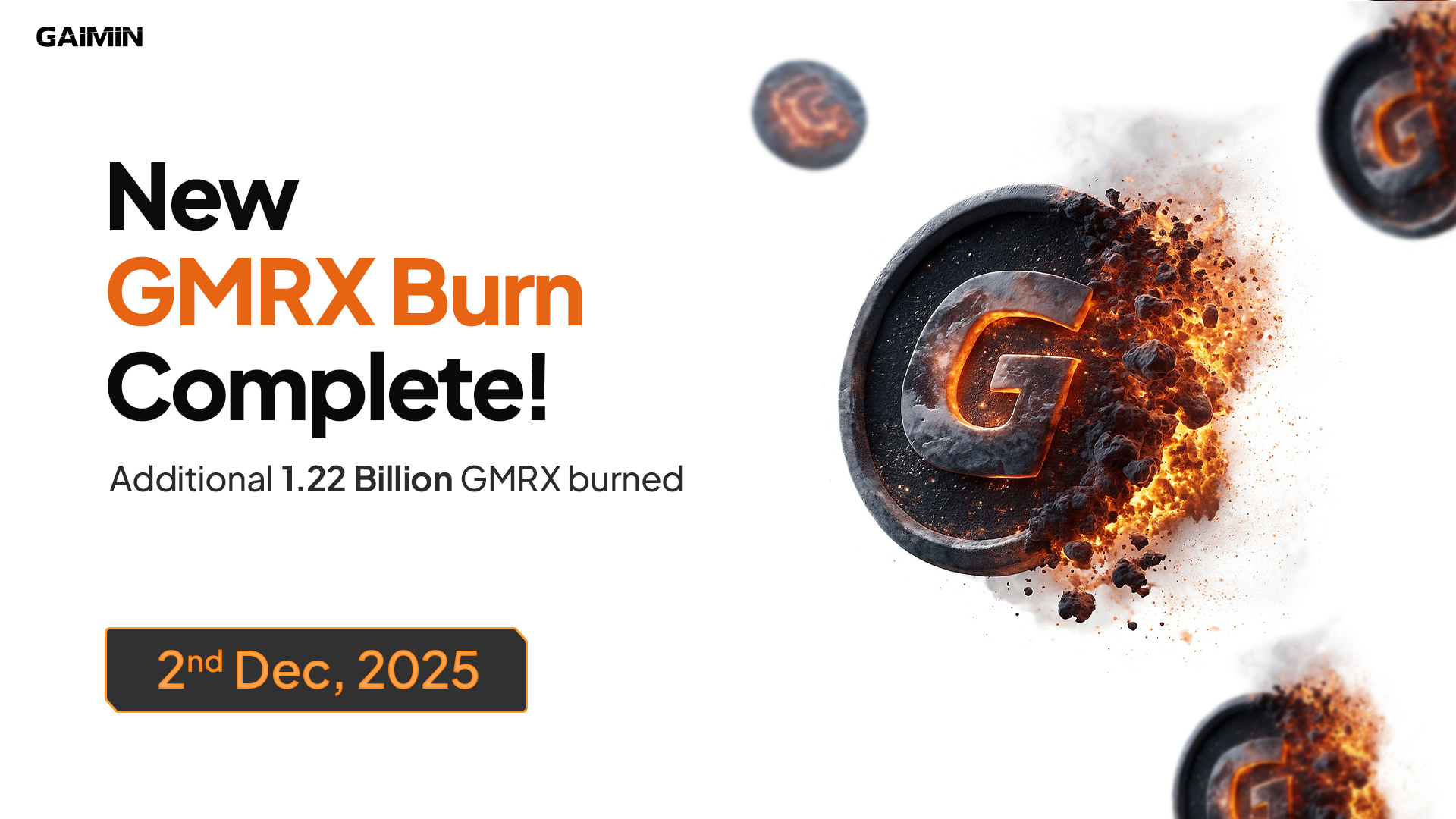
On Tuesday, December 2, 2025, we executed another mega burn of 1.22 billion GMRX tokens to wrap up the year. However, this was not just any other burn; it was a pivotal one.
For many, this will appear to be a standard deflationary event. Internally, it is something else entirely going on behind the scenes: a recalibration of our economy based on a massive shift in our network’s reality.
Earlier this year, we shifted to a product-led strategy. We deployed a new product for the GAIMIN Launcher. We expected just better UI/UX feedback from an impressed audience, but what we got was a data anomaly that has forced us to rethink our entire approach due to the exponential growth of the GAIMIN network.
The 393-Hour Anomaly
In distributed computing (DePIN), consumer devices are treated as "unreliable." They drift. They disconnect. The current industry standard for average uptime is low.
But since our architectural and product overhaul, our network stability has surged from an average of 37 hours to 393 hours!
Yes, you heard it right; that wasn’t a typo. That is 16 days of continuous, average uptime per node. We set out to refresh a gaming interface; we inadvertently built one of the most stable, high-density distributed supercomputers on the market.
Realigning for Velocity.
When you have a network with this level of stability, the strategy changes. We are now generating compute supply at a rate that demands specialized management of the various business units.
- GAIMIN will continue to focus exclusively on what matters for its B2C audience: utility for web3 users, monetization for PC owners, and enhanced experiences and rewards for gamers and esports fans. The growth of the Launcher, now seeing a 63% increase in DAU, requires our total focus. Hence, on this side of our organization, we are doubling down on this audience listed above, our Launcher, and the token economy that powers this engine.
- On the other side, Orbon Cloud has been spun out as a standalone unit. With the supply side secured by GAIMIN’s growth, Orbon is now free to focus entirely on engineering a new approach to the cloud with an aggressive focus on acquisition.
The Path Forward: Ending 2025 Strong and Going Harder in 2026
We are entering a phase of aggressive focus to accommodate this scale. You will see changes in how we organize our corporate hierarchy in the coming months to better house these distinct verticals for more focus.
One thing remains the same. We’re supplying a new cloud solution to the market through our community of gamers, and we are extremely grateful for our GAIMIN community.
As product use cases keep taking shape, supply continually reducing via periodic burns, and demand ramping up with massive engagement in user monetization, GAIMIN is poised for an even stronger 2026.
Stay tuned!